WHEAT AND ALKALINE
Held by gluten
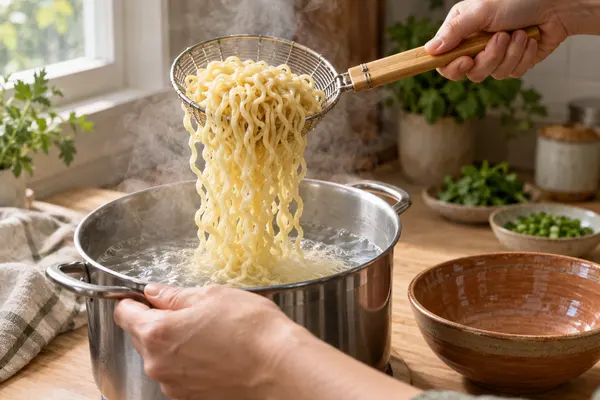
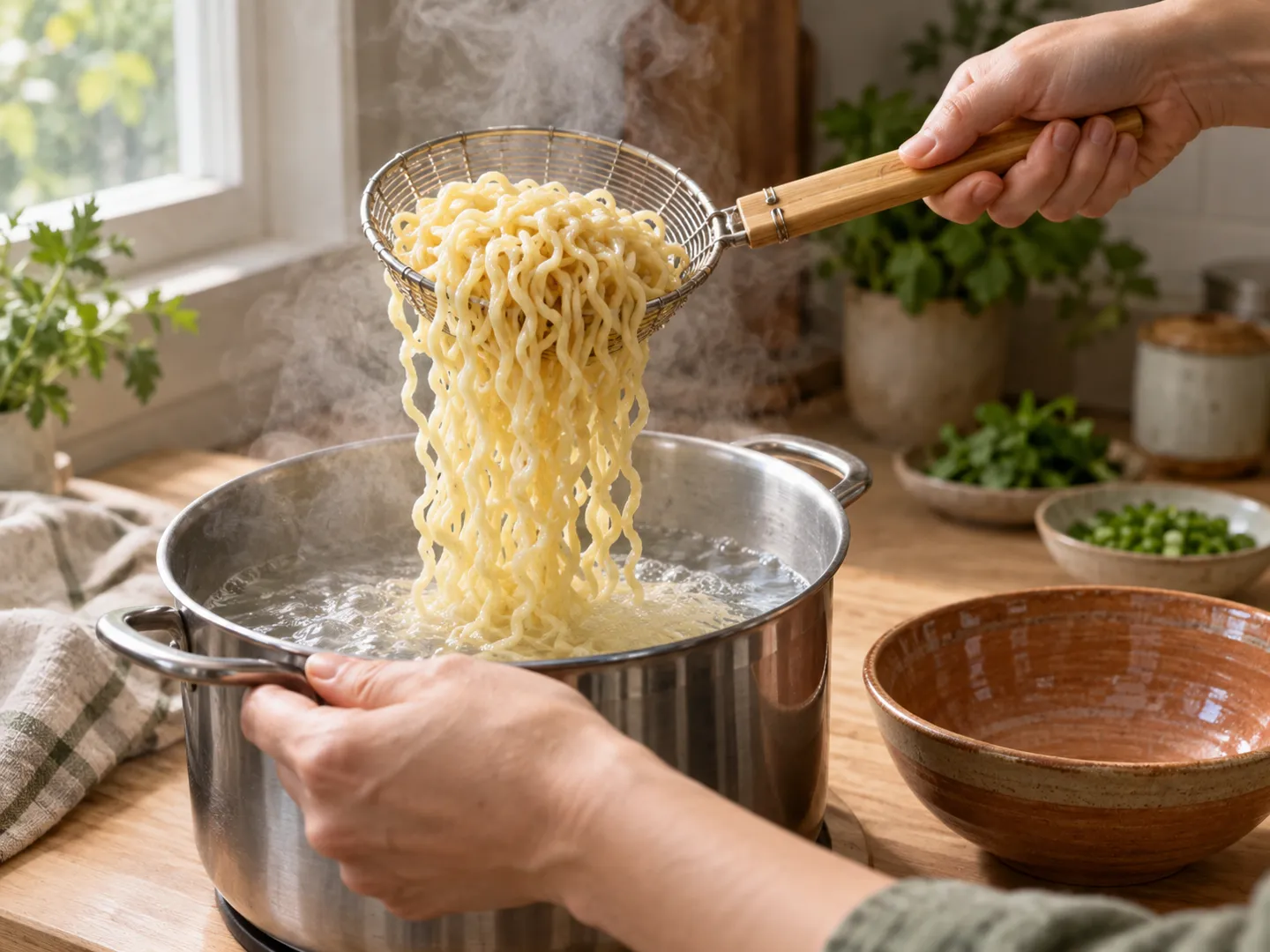
Wheat noodles get their stretch from gluten. Ramen-style noodles add alkaline salts, which help turn them yellow.
Why yellow? doodlenoodles
Start
WHAT'S IN THE NEST
A noodle is mostly one grain and some water. Which grain changes almost everything.
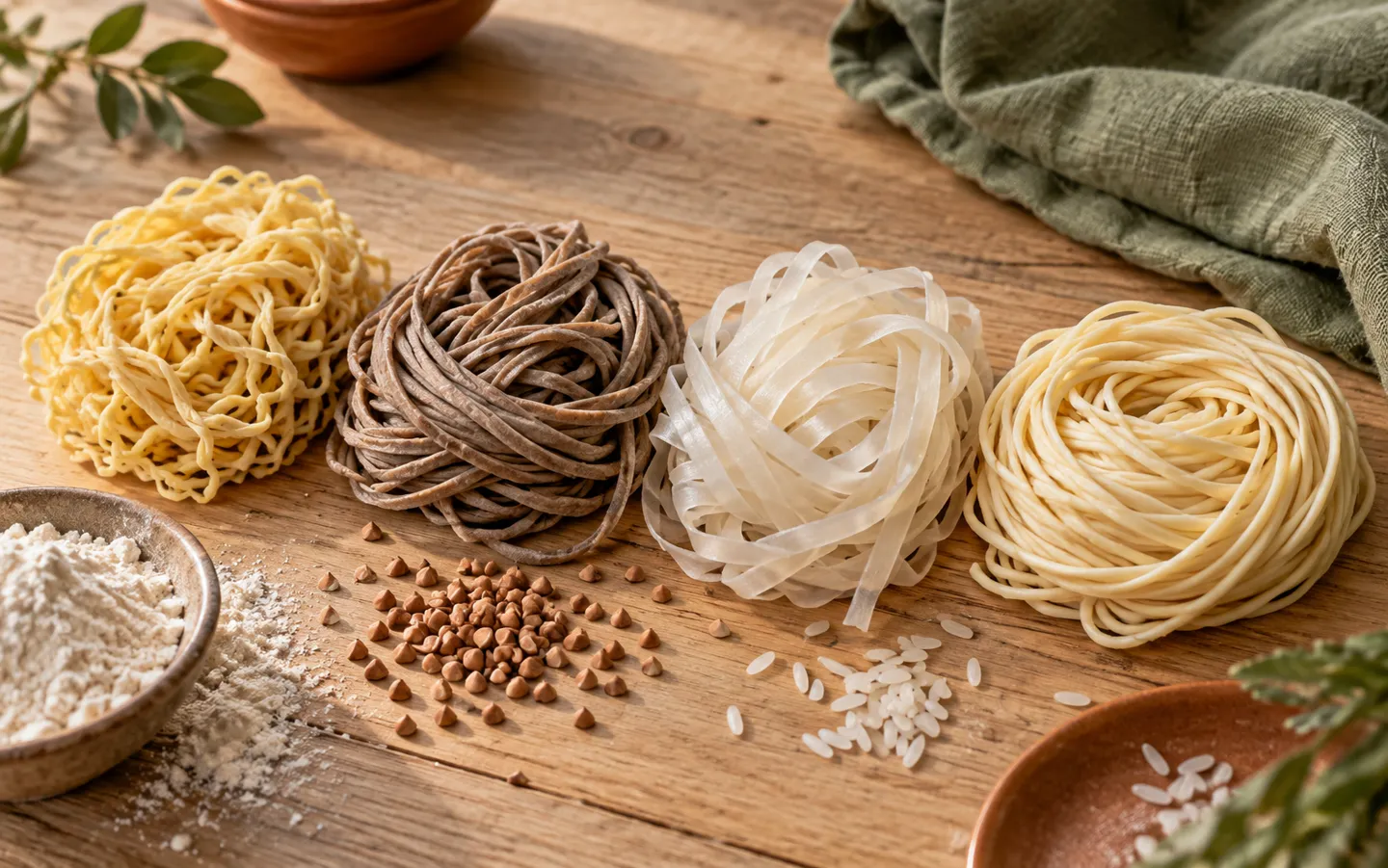
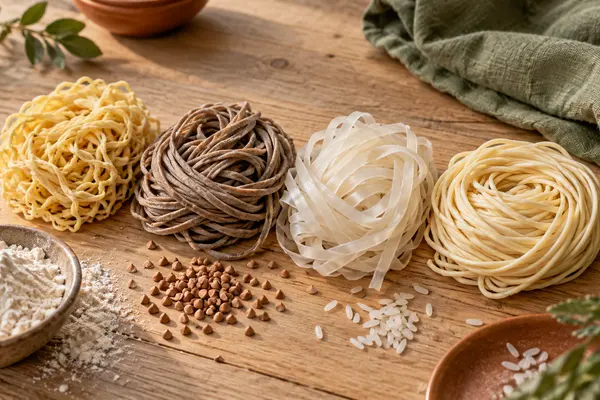
Wheat noodles hold together with gluten. Ramen-style noodles add alkaline salts. Rice and millet have no gluten at all, and buckwheat is the one to check twice. Here is what is in the nest, with the sources linked.
Plain English, with the sources linked.
GRAINfirst
Check a noodleKeep in mind
THE SHORT ANSWER
What holds the noodle together
tells you most of what you need.
WHEAT AND ALKALINE
Wheat noodles get their stretch from gluten. Ramen-style noodles add alkaline salts, which help turn them yellow.
Why yellow?RICE
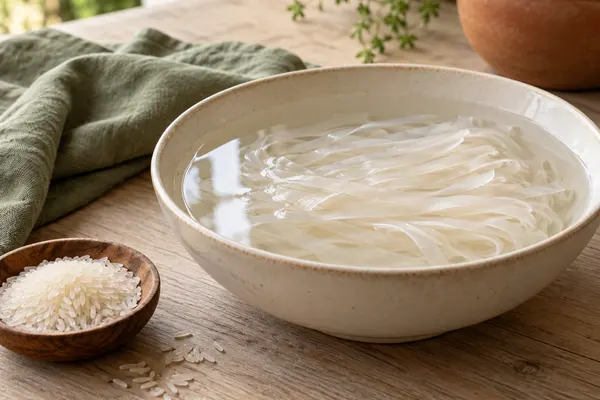
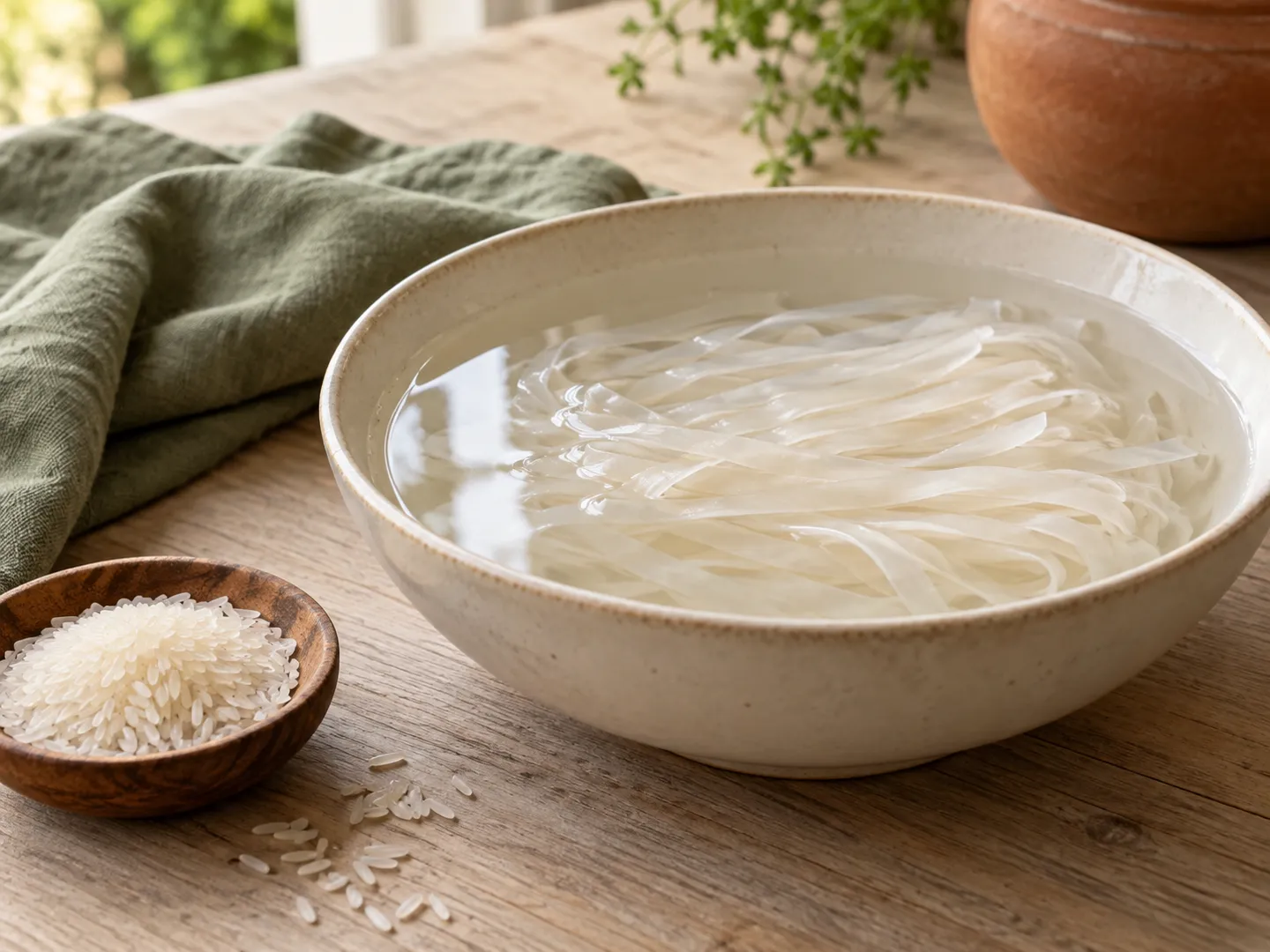
Rice has no gluten, so rice noodles depend on cooked starch setting, and on how much amylose the rice contains.
The amylose detailBUCKWHEAT
Buckwheat is not wheat, but a buckwheat noodle can still contain wheat flour. The ingredients list settles it.
Check a noodleA QUICK NOODLE CHECK
Pick the main grain on the packet. The gluten grouping follows Coeliac UK, which lists wheat, barley and rye as the cereals that contain gluten.
This is a general guide to grains, not to any product. Sauces, seasoning and shared factories can add gluten, so always read the label.
TWO NUMBERS WORTH KNOWING
One explains the look of a ramen noodle,
the other what is in the cup.
22–27%
Share of yellow colour from the alkaline reaction
Researchers estimated that the reaction between wheat flour and alkaline salts gives about a quarter of a yellow noodle's colour. Flour pigments such as lutein add more, and much of the rest is still unexplained.
ALKALINE NOODLES · 2016
13 of 48
Products over the daily sodium limit, with all the soup
Tested products held 834 to 5,800 mg of sodium per 100 g. For 13 of the 48, eating the whole pack and drinking all the soup would go past the 2,000 mg daily limit.
INSTANT NOODLES · HONG KONG
Neither number is a reason to give noodles up. Both are reasons to read the packet: the flour for what the noodle is, and the nutrition panel for what comes with it.
NEXT TIME YOU SHOP
Step 1
The first ingredient tells you which family the noodle belongs to: wheat, rice, buckwheat or something else.
Step 2
A noodle sold as buckwheat can also contain wheat flour. If you avoid gluten, the ingredients list is what counts.
Step 3
In the Hong Kong survey, eating the whole pack and drinking all the soup pushed 13 of 48 products over the daily sodium limit.
Step 4
Products labelled non-fried generally had less total and saturated fat in the same survey. Per 100 g figures make packs easy to compare.
NOODLE FACTS
Noodles about 4,000 years old, found at the Lajia site in north-western China and reported in Nature in 2005, were made from broomcorn and foxtail millet, not wheat.
The World Instant Noodles Association put global demand in 2024 at 123.07 billion servings, a record. China and Hong Kong together accounted for 43.80 billion.
Coeliac UK lists wheat, barley and rye as the cereals that contain gluten. Rice, millet and buckwheat are on its gluten-free list.
A 2018 study of extruded brown rice noodles found the best results at about 19 to 20.5% amylose, and noted earlier work recommending about 21 to 25% for white rice noodles.
The WHO recommendation quoted by Hong Kong's Centre for Food Safety is less than 2,000 mg of sodium a day, about 5 g of salt or one level teaspoon.
QUICK QUESTIONS
Short answers to the questions people ask most.
The oldest noodles yet found are about 4,000 years old. Archaeologists found long, thin yellow noodles in an upturned bowl at the Lajia site in north-western China, and reported in Nature in 2005 that they were made from broomcorn and foxtail millet.
Ramen-style noodles are wheat noodles made with alkaline salts. A 2016 study estimated that the reaction between flour and those salts gives about 22 to 27% of the noodles’ total yellow colour; natural pigments in the flour, such as lutein, account for some of the rest.
Rice is a gluten-free grain, according to Coeliac UK, which lists the gluten-containing cereals as wheat, barley and rye. Other ingredients can still be added, so the label is the thing to check.
Buckwheat itself is gluten free, despite its name. A noodle sold as buckwheat can also contain wheat flour, so if you avoid gluten, read the ingredients list rather than the name.
A Hong Kong survey of 48 instant noodle products found 834 to 5,800 mg of sodium per 100 g. For 13 of them, eating the whole pack and drinking all the soup would exceed the daily limit of 2,000 mg of sodium (about 5 g of salt).
Destination
Updated
A NAME WITH BITE
doodlenoodles.com is part of the DoodleSale portfolio. It isn't in an auction right now, but you can ask about leasing it.